The Myopia Epidemic in Children — Why Screens Are Just Part of the Problem
Fifteen years ago, school myopia was associated with children in fourth or fifth grade. Today, optometrists and ophthalmologists are increasingly prescribing corrective glasses for seven- and eight-year-olds — sometimes even for children just starting to learn to read.
This is not just an impression. It is a documented trend that specialists worldwide are directly calling an epidemic.
The scale of the problem is greater than most parents realize
According to the latest data, half of children in Poland aged 3–15 have vision problems, and among them, as many as 58% struggle with myopia. This is not a marginal issue or one that affects only a select group of children — it is a problem that affects every other child in Polish schools.
The direction of change is also concerning. Just a few years ago, myopia was most commonly diagnosed in nine- and ten-year-olds — today, it is already being recognized in children at the beginning of primary school, that is, those aged seven to eight. The condition not only appears more frequently but also earlier — and the younger the child at the time of diagnosis, the longer the condition can develop and the greater the values it can ultimately reach.
On a global scale, the perspective is equally serious. The World Health Organization (WHO) predicts that by 2050, the problem of myopia could affect half of humanity.
Why "it's just screens" is too simple an explanation
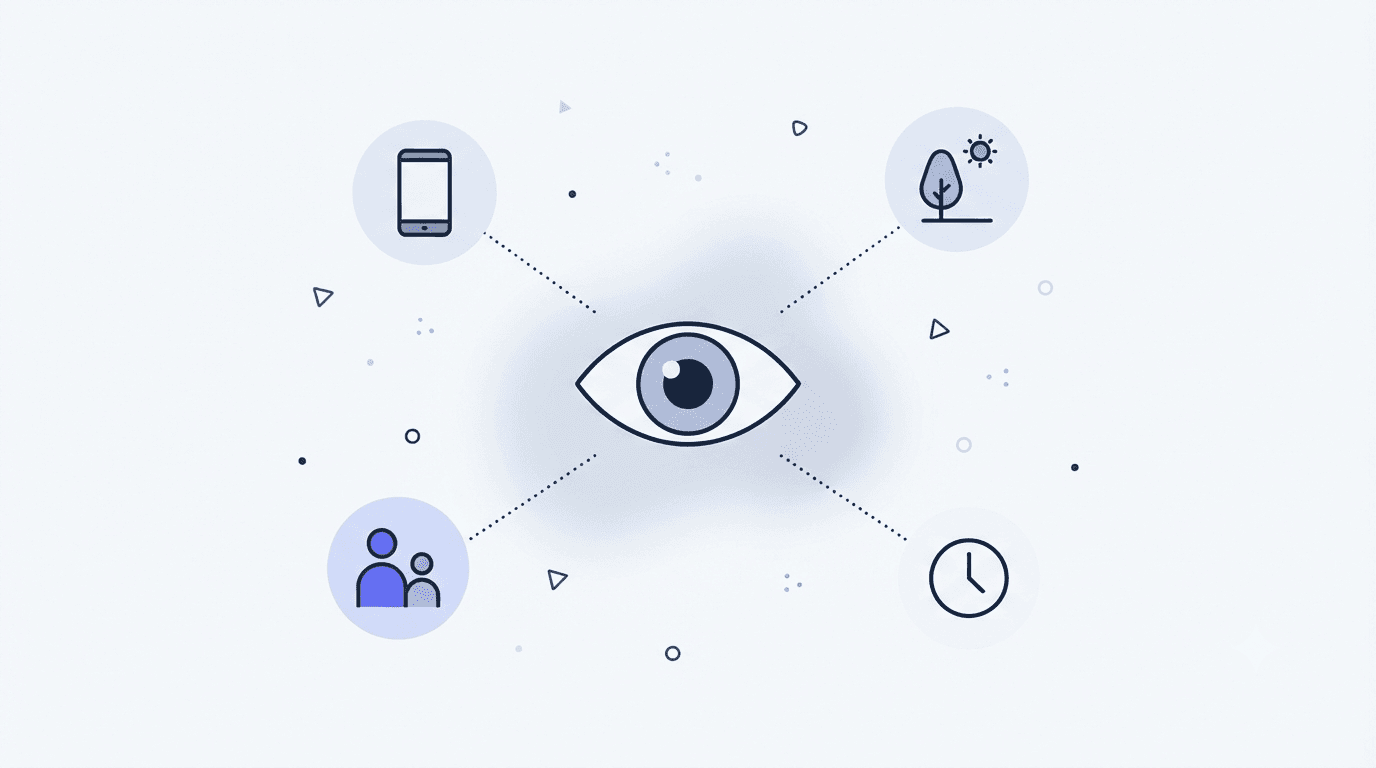
Screens are an easy scapegoat — and they do matter. But reducing the entire problem to "too much phone use" overlooks something more important: the mechanism through which myopia develops is deeper than just screen time.
A child's eye grows along with them. Under ideal conditions, the eyeball elongates harmoniously, and light entering the eye focuses precisely on the retina. Myopia occurs when this growth is too rapid — then the image of distant objects focuses in front of the retina rather than on it, resulting in a blurred effect.
Several factors influence this process simultaneously:
Genetics — if one parent is myopic, the risk for the child increases; if both are, the risk increases even more.
Lack of natural daylight — this is one of the best-documented protective factors in research on this topic. Children who spend a lot of time outdoors in natural light are less likely to develop myopia — regardless of how much time they spend close to text or screens.
Excessive "near work" — and this is not just screens. It also includes long hours spent over books, notebooks, or drawing. The screen is one element here, but not the only one.
Lack of breaks and changes in viewing distance — an eye that focuses on close distances for hours without a break for looking into the distance works under constant accommodative tension.
In other words: the screen itself is not to blame, but the entire lifestyle in which the child rarely looks far away, seldom goes outside, and where near work (in any form) dominates the rest of the day.
What really helps — and what science says about it
The good news: myopia cannot be reversed, but its progression can be slowed down, and most importantly — the risk of its occurrence can be reduced through simple, well-documented habits recommended by organizations such as the Polish Ophthalmological Society and international vision health organizations:
- At least two hours a day outdoors in natural light — this is one of the strongest protective factors known to modern science
- Limiting "near work" time to a reasonable level, with regular breaks
- The 20-20-20 Rule — every 20 minutes of near work, look at something at least 20 feet away for 20 seconds
- Regular vision checks — because a child with a slight vision problem often does not report any issues, simply not knowing that they could see better
It is also worth debunking the harmful myth that still circulates among parents: incomplete correction does not "protect" the eyes from becoming lazy — on the contrary, a child constantly looking at a blurred image puts even more strain on the visual system.
This is not a battle to be fought in the office
The biggest challenge is not the lack of knowledge about what helps — but implementing this amidst the chaos of everyday life. It’s easy to say "two hours outside and breaks every 20 minutes," but harder to maintain when the child has lessons, tutoring, and the parent is working remotely and doesn't remember their own breaks.
Information: ocu•vio does not diagnose or treat vision problems. It is a tool supporting daily prevention, healthy habits, and visual comfort for the whole family. If you notice concerning symptoms or suspect a vision problem in your child, consult an optometrist or ophthalmologist.
Read also
Magdalena Ojrzyńska — founder of ocu•vio
Return to the blog