Five Eye Games Your Child Can Do Without Complaining
"Take a break from the screen." You know what happens next. The child doesn't get up. Or they get up, stand in the middle of the room, look around, and after a moment, return to the screen. Not because they are stubborn. They simply don't know how to fill those few minutes.
Why a Break Without Ideas Doesn't Work
For us, a break is a relief. We sit down, put our phone aside, look out the window, and that's enough for us.
For a child, a break looks different. Someone took away what was interesting and didn't give anything in return. A break is taking something away. A game is giving something. It's the same minute, just called differently, and that's the whole difference between "I don't want to" and "once more."
That's why it's best to have a few ideas on hand that don't need to be thought up on the spot, especially when you're tired and just want the child to take a moment away from the screen.
Five Games in a Minute
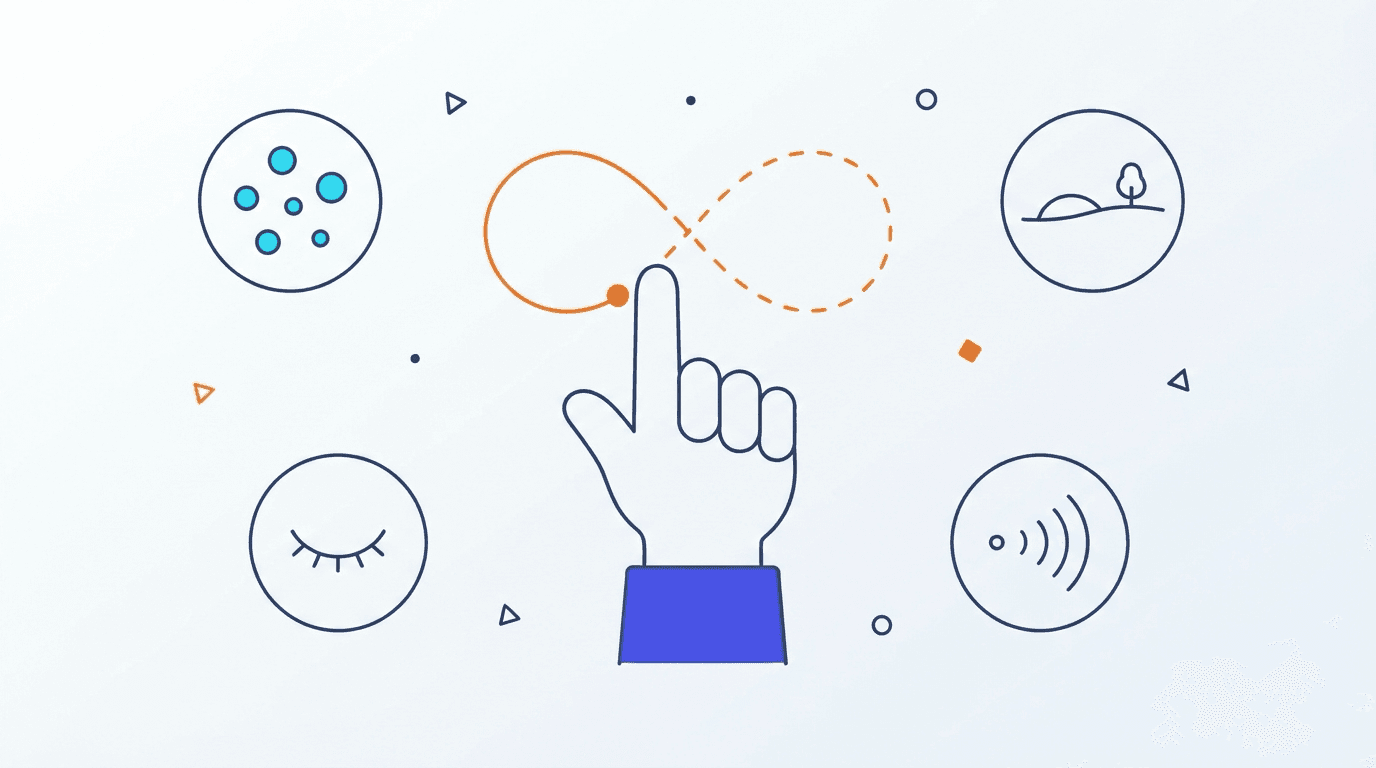
Finger on an Adventure. You draw circles, eights, and zigzags in the air with your finger, and the child follows your finger with their eyes. The head stays in place: that's the hardest and funniest part.
Five Things of One Color. You choose a color and look for five objects in that shade in the room. It also works on the bus and in the doctor's waiting room.
The Farthest Point. The child looks out the window and searches for the farthest thing they can see: a chimney, a tree, a tower, a cloud. Then they describe what's next to it. The storytelling is meant to make them look longer than a second.
Blinking for Five. Five slow blinks, as if the eyelids are taking pictures. No rush and no squinting.
What Do You Hear. Closed eyes and three sounds to name: the fridge, a car, a bird outside. The eyes get a moment of darkness, and the child gets a moment of silence.
Each of these takes about a minute. You can do one, or you can do three. There's nothing to check off here.
What Your Child Gains
None of these games look like tasks, but each one requires something real. Following the finger with their eyes requires concentration. Searching for colors exercises observation and comparison. The farthest point is about shifting focus from near to far, while also describing what they see.
So much more happens than when the child simply gets up from the desk and waits for the break to end.
What You Gain
You don't have to think of anything on the spot. You don't have to ask three times or argue about it. Instead of "stop," you say "let's see if you can do it," and that's a conversation that usually ends well for both sides.
And it's not about taking away screens. It's about having something else in between.
How to Have It on Hand
These games are available on printable cards. You can hang them above the desk or tuck them into a pencil case so the child can choose what they want to do. You can find them among the printable materials, along with mazes and coloring pages.
This material is for informational purposes only and does not replace consultation with a specialist. If you have concerns about your child's vision, it's advisable to contact an optometrist, ophthalmologist, or orthoptist.
Read also
Magdalena Ojrzyńska, founder of ocu•vio
Return to the blog